


On the Ground at “Fashion in Helsinki 2026” — Where Education, Craft, and Community Intersect
Fashion in Helsinki continues to grow as a platform that showcases young Finnish designers and brands to the world. Finland has long cultivated a strong design culture, represented by names such as Marimekko and Kalevala. In recent years, however, new talent has emerged rapidly, particularly around Aalto University, drawing increasing international attention within the fashion industry.
QUI spent four days on the ground in Helsinki covering the event. What emerged was an approach to fashion that sees it as a culture deeply connected to education, craft, and community.
Forests and Sea: The Beginning of “Fashion in Helsinki”
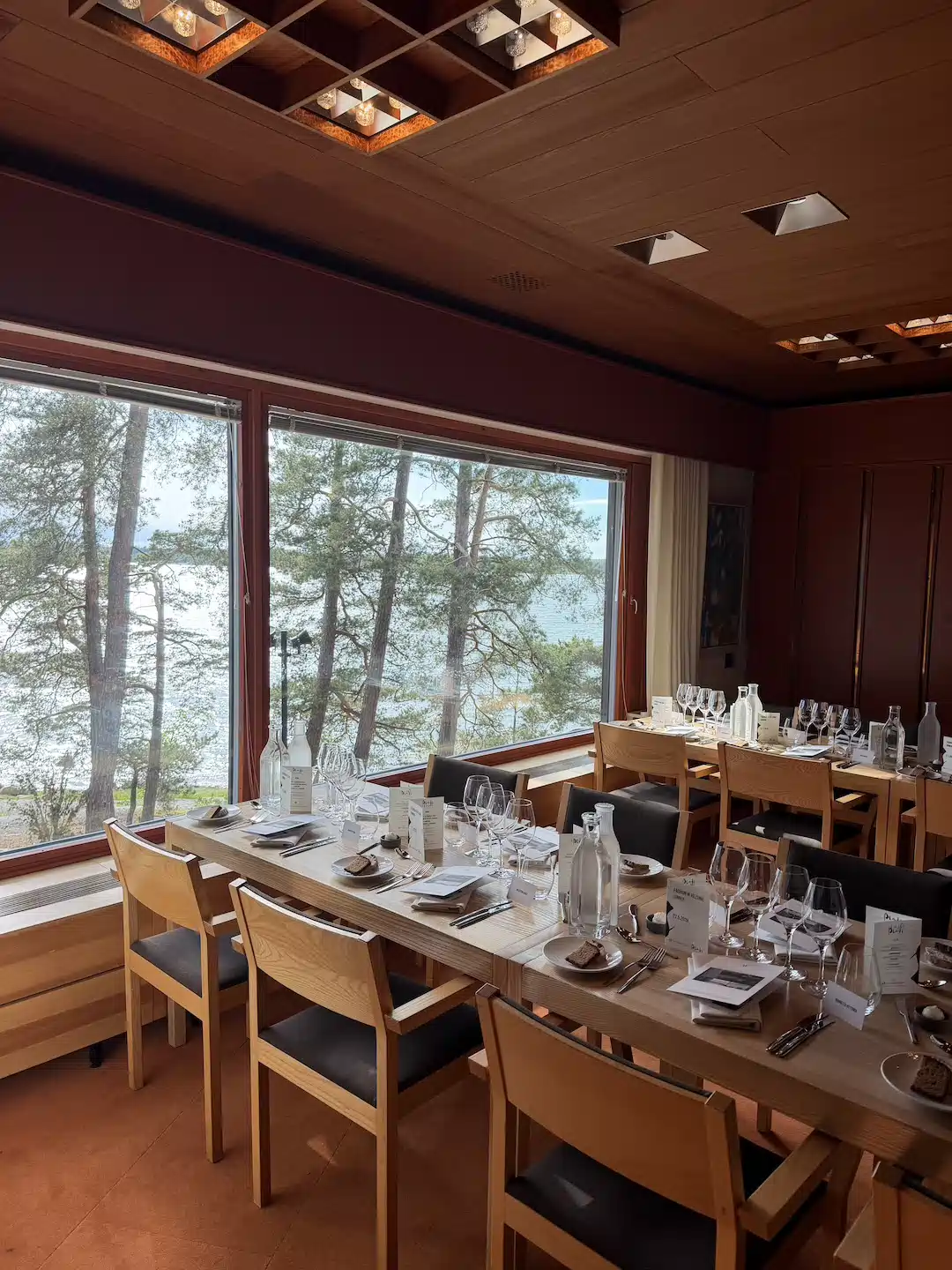
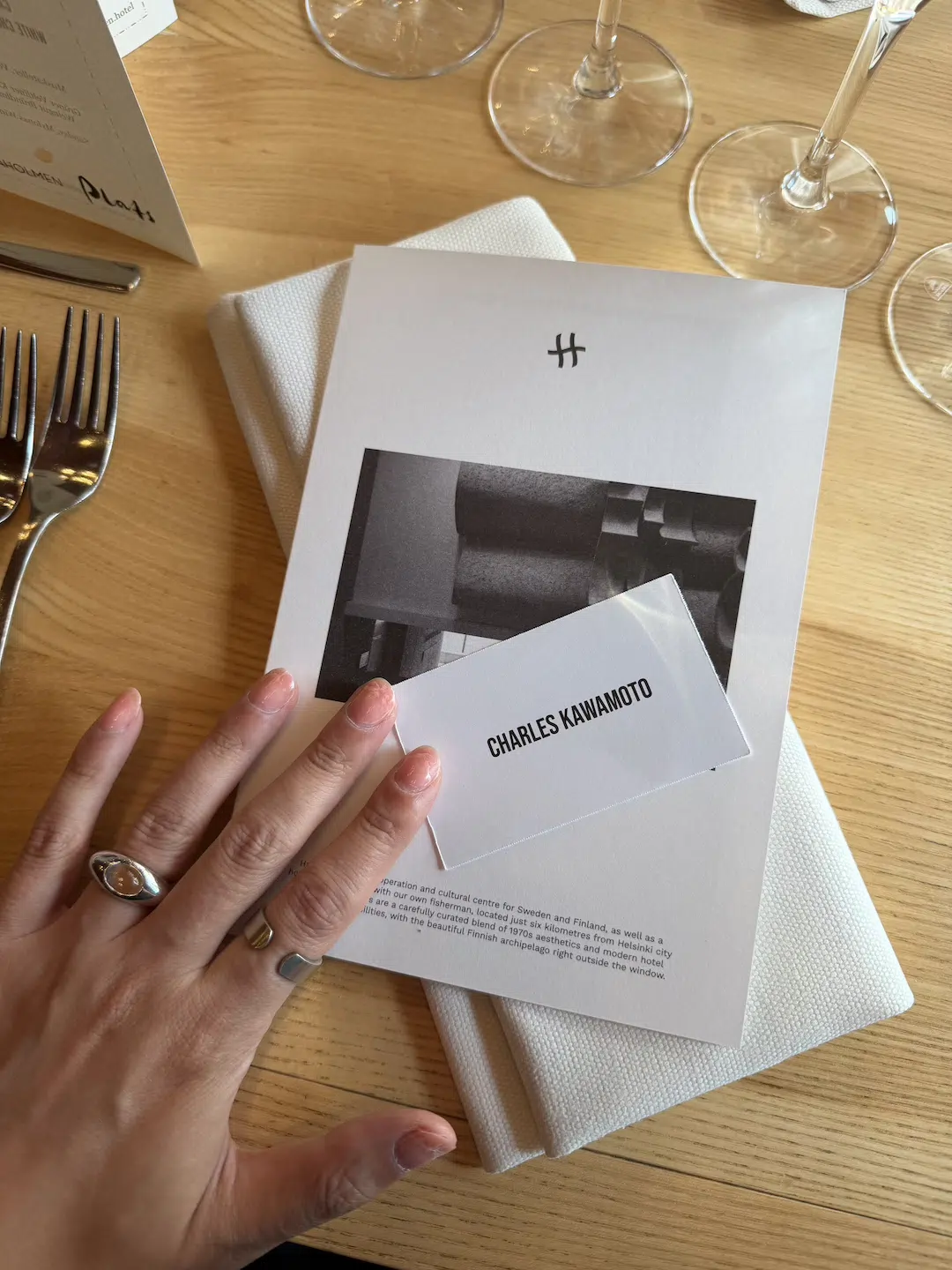
On the first day of arrival, the journey began in Hanaholmen on the outskirts of Helsinki. Known as a cultural exchange hub between Finland and Sweden, the venue hosted the welcome dinner. Through the windows, the archipelago stretched across the horizon as guests gathered around shared tables. Regardless of nationality or professional background, participants engaged in conversations not only about fashion, but also about culture and everyday life. The closeness of these interactions seemed to embody the spirit of the entire event.

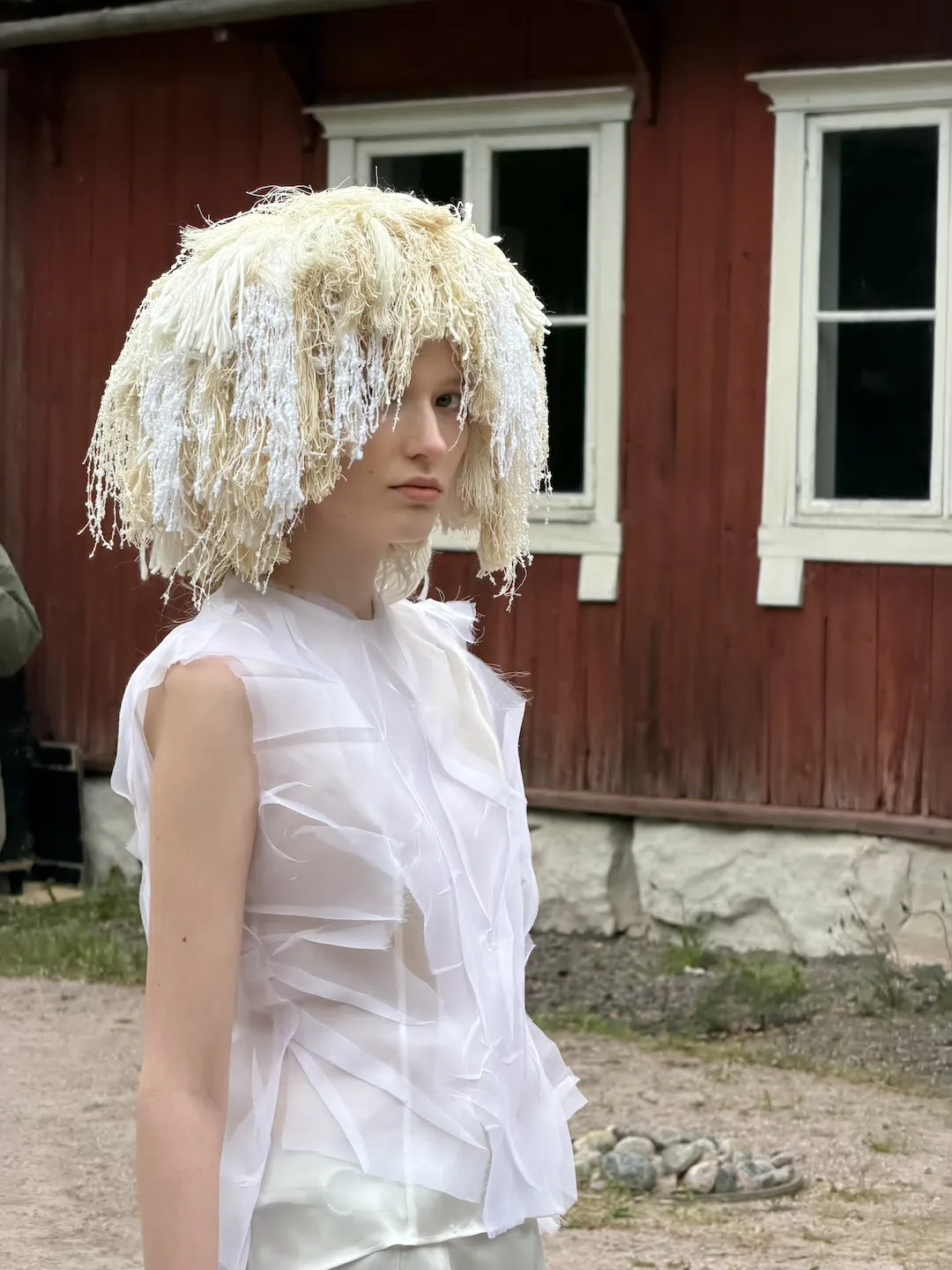
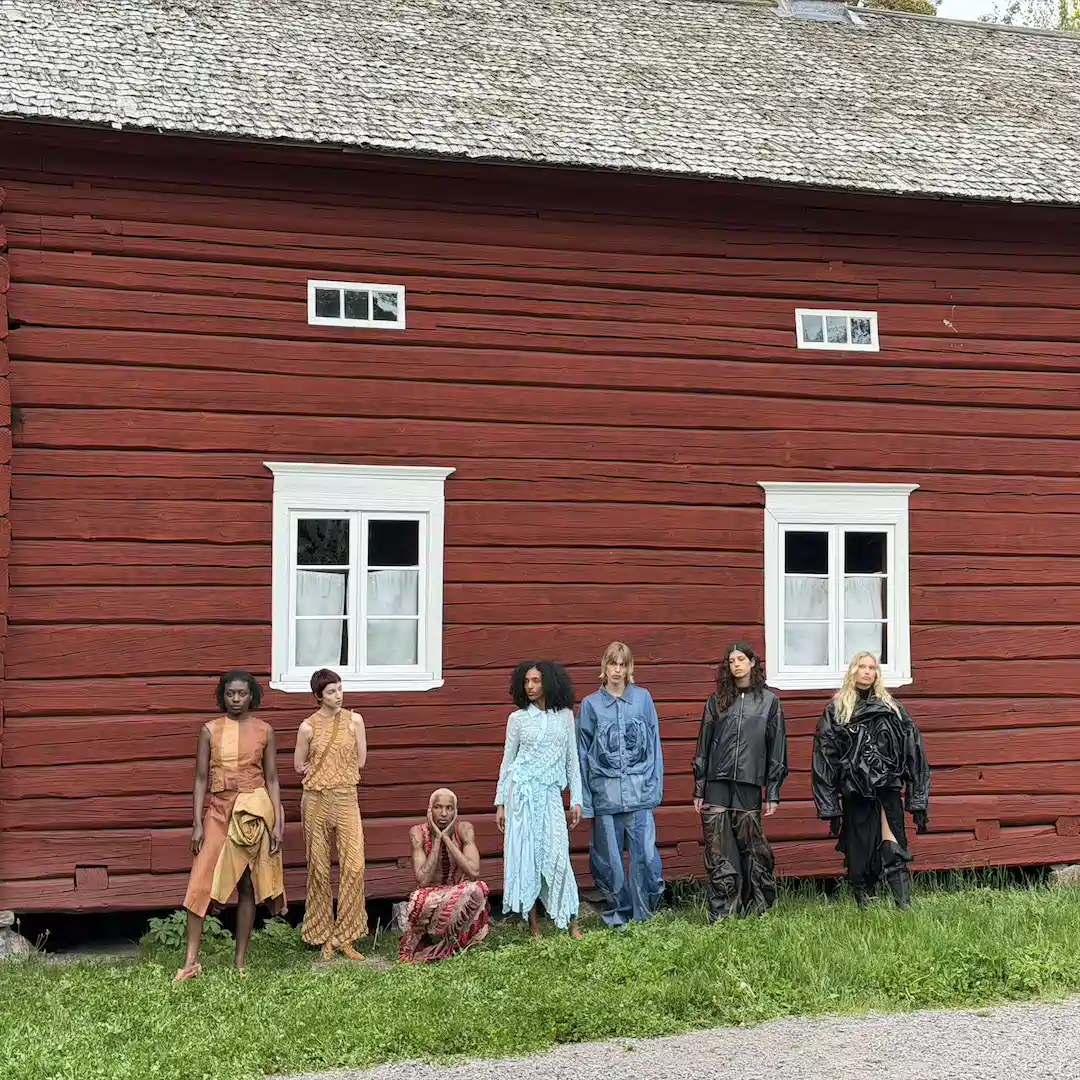
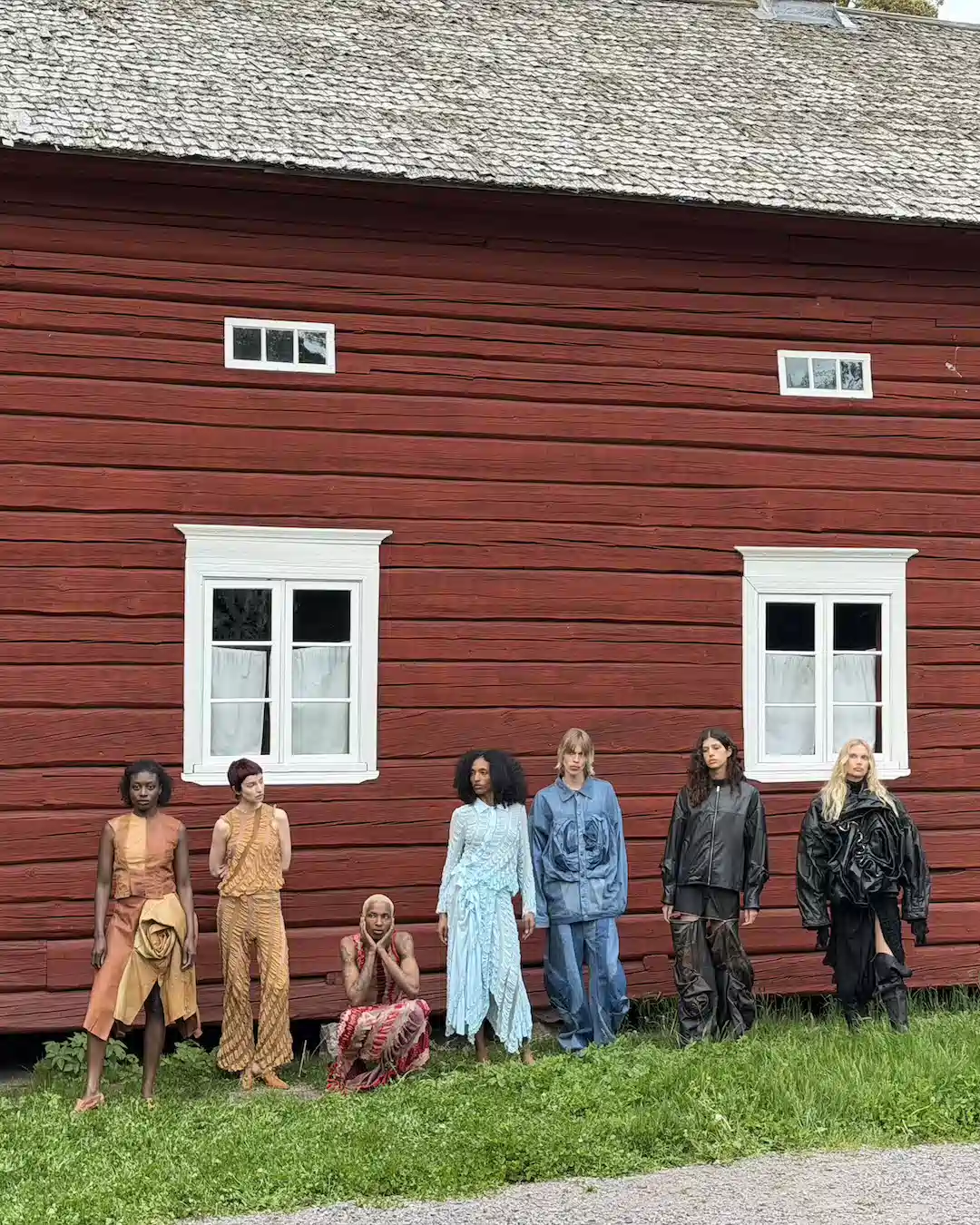
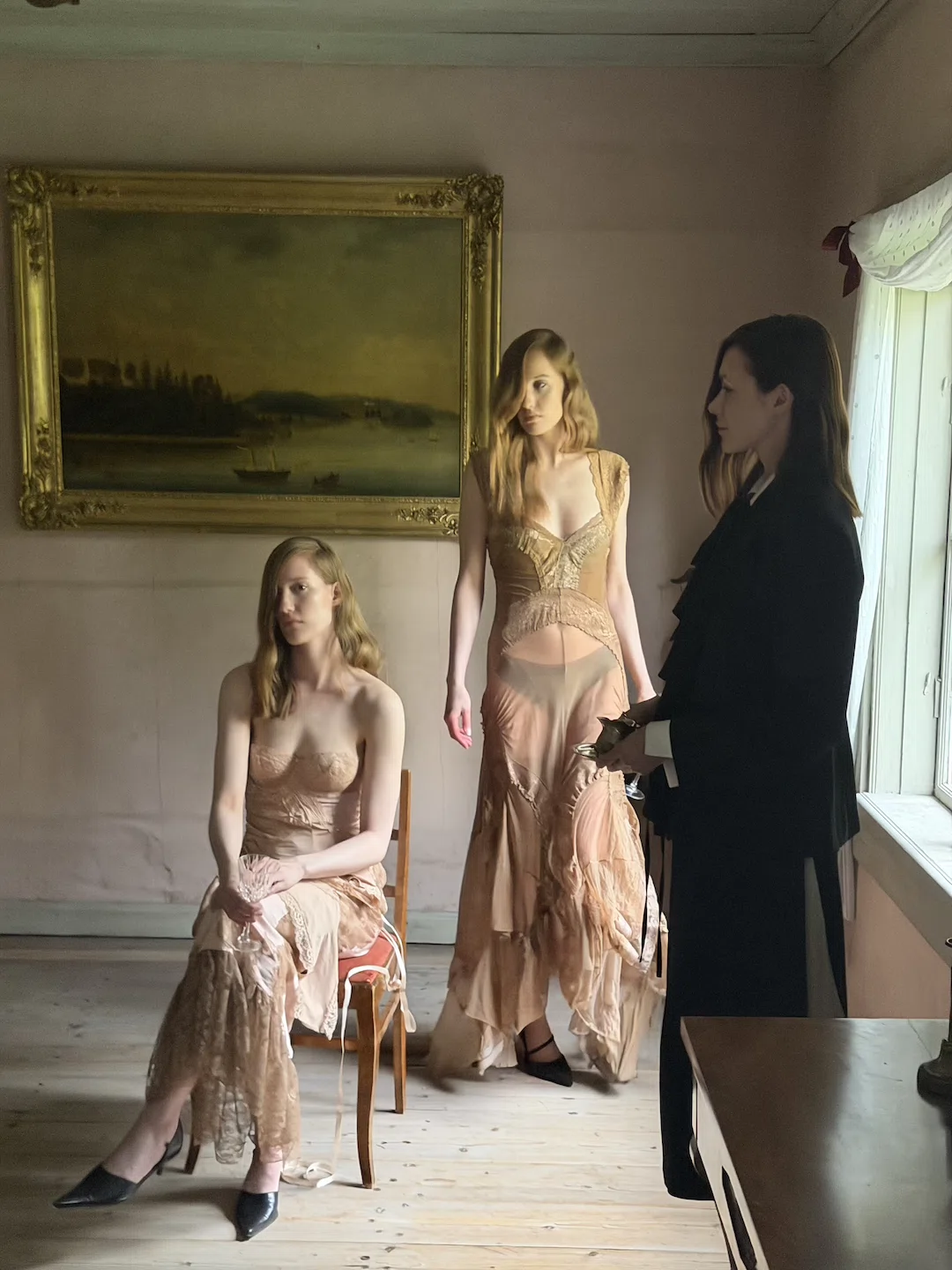
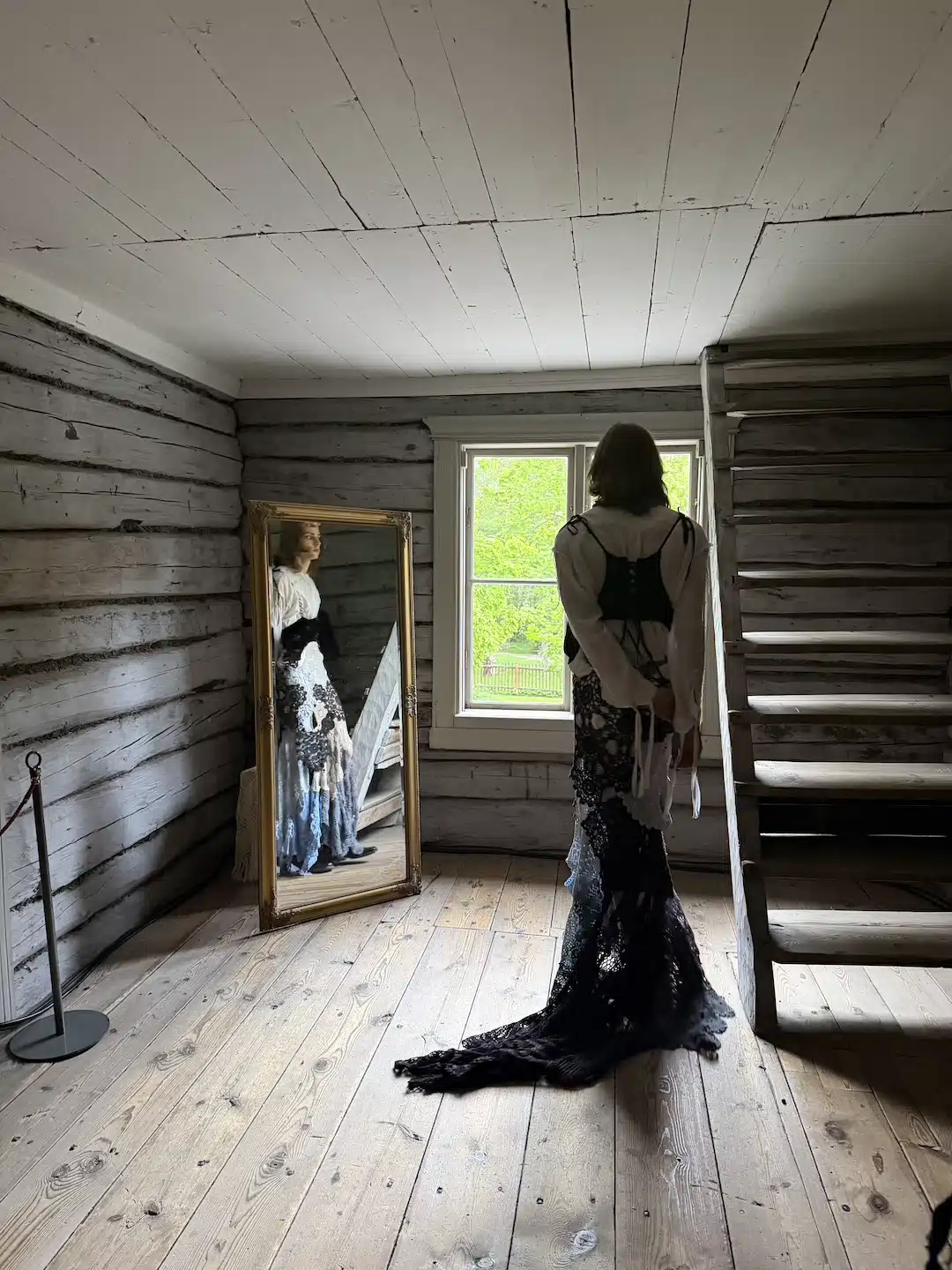
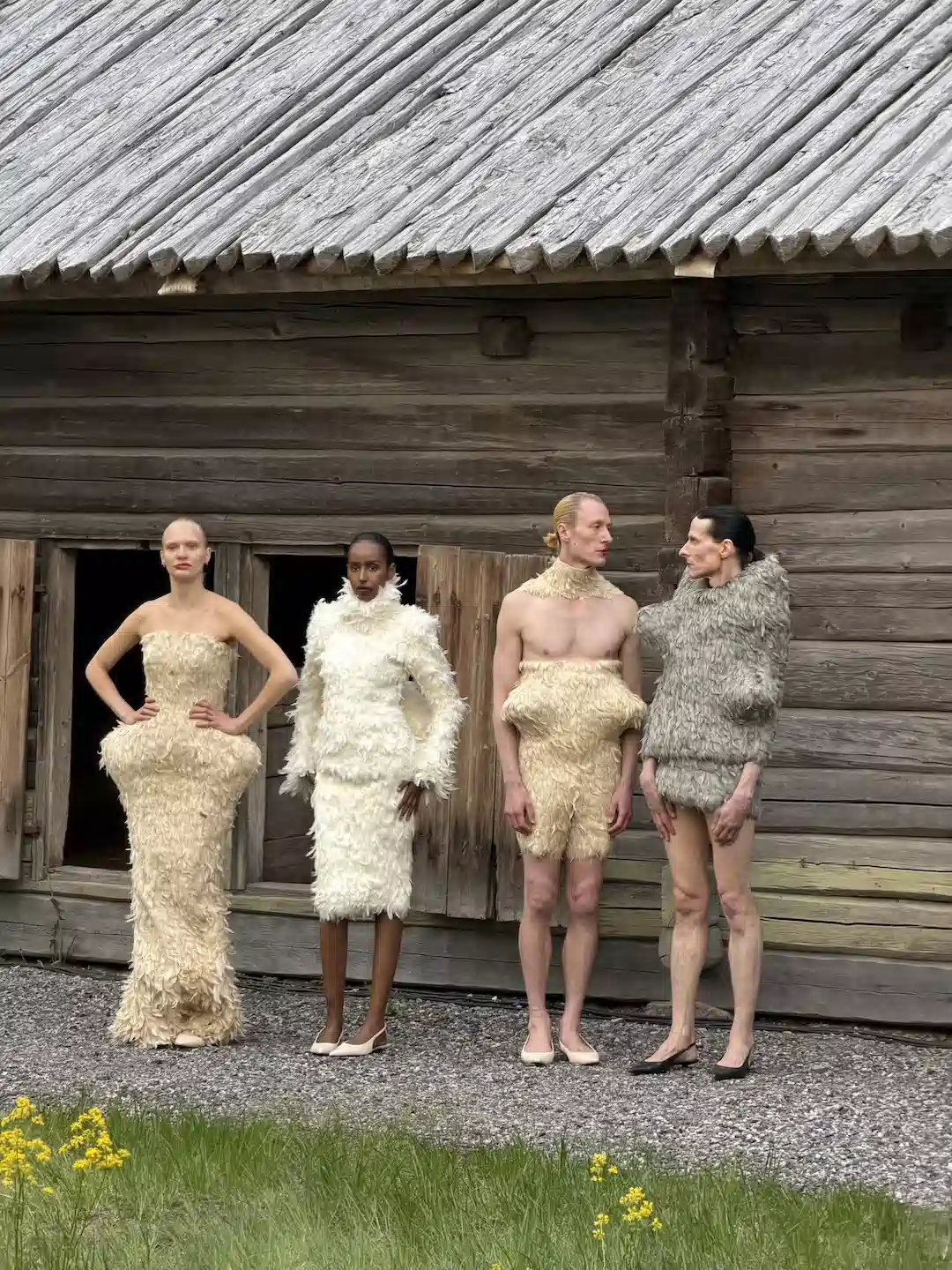
In the evening, the venue shifted to Seurasaari Island. Against the backdrop of an open-air museum preserving historical Finnish architecture, the opening presentation of Fashion in Helsinki took place. Even around 9 p.m., the sky remained bright, bathed in the soft light of the midnight sun. Ten emerging designers presented their work in this atmosphere. The combination of historical buildings, contemporary fashion, nature, and creative expression felt distinctly Finnish—less like a traditional runway show and more like a cultural experience.
The Future Shaped by a New Generation of Designers
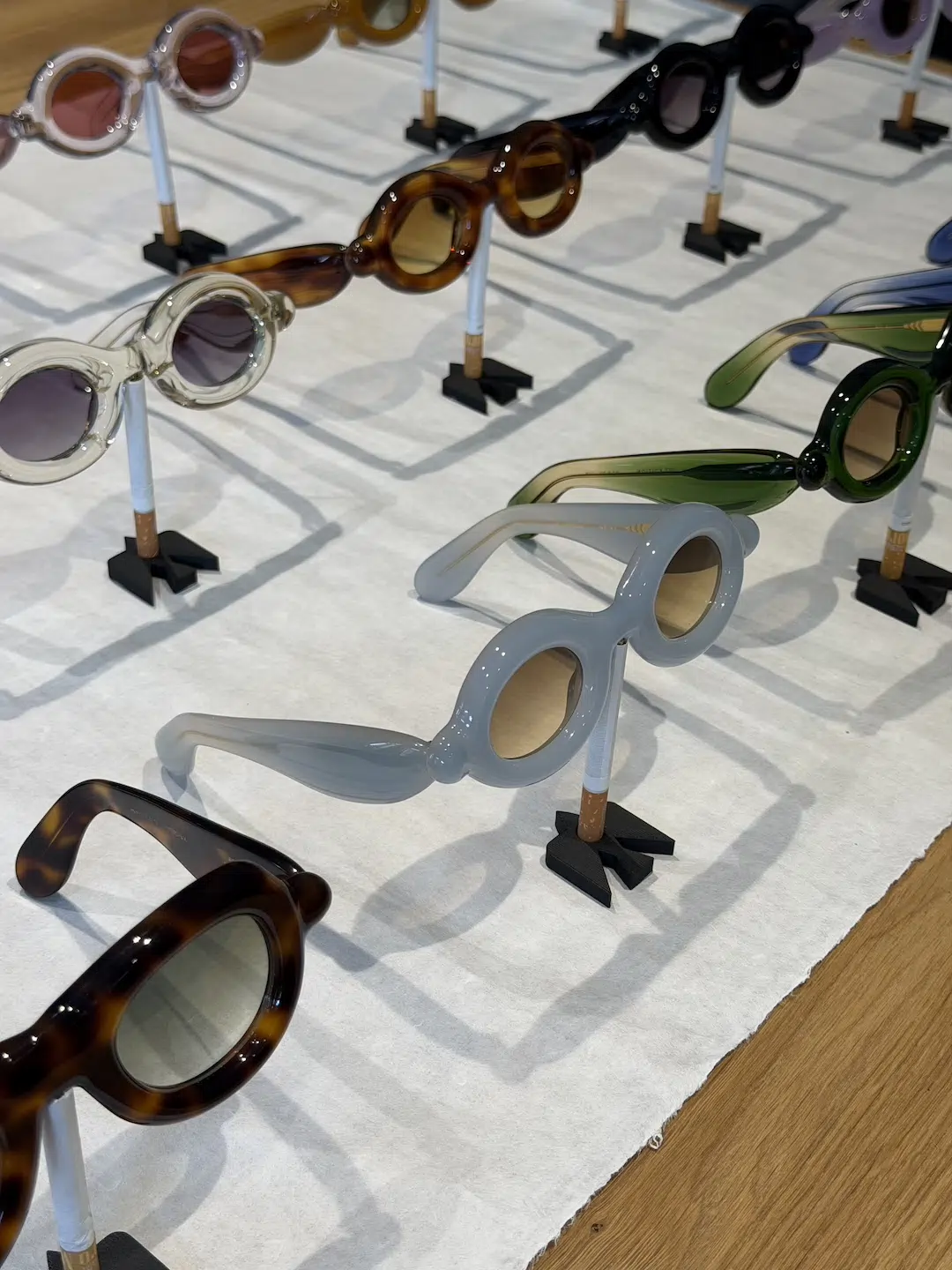
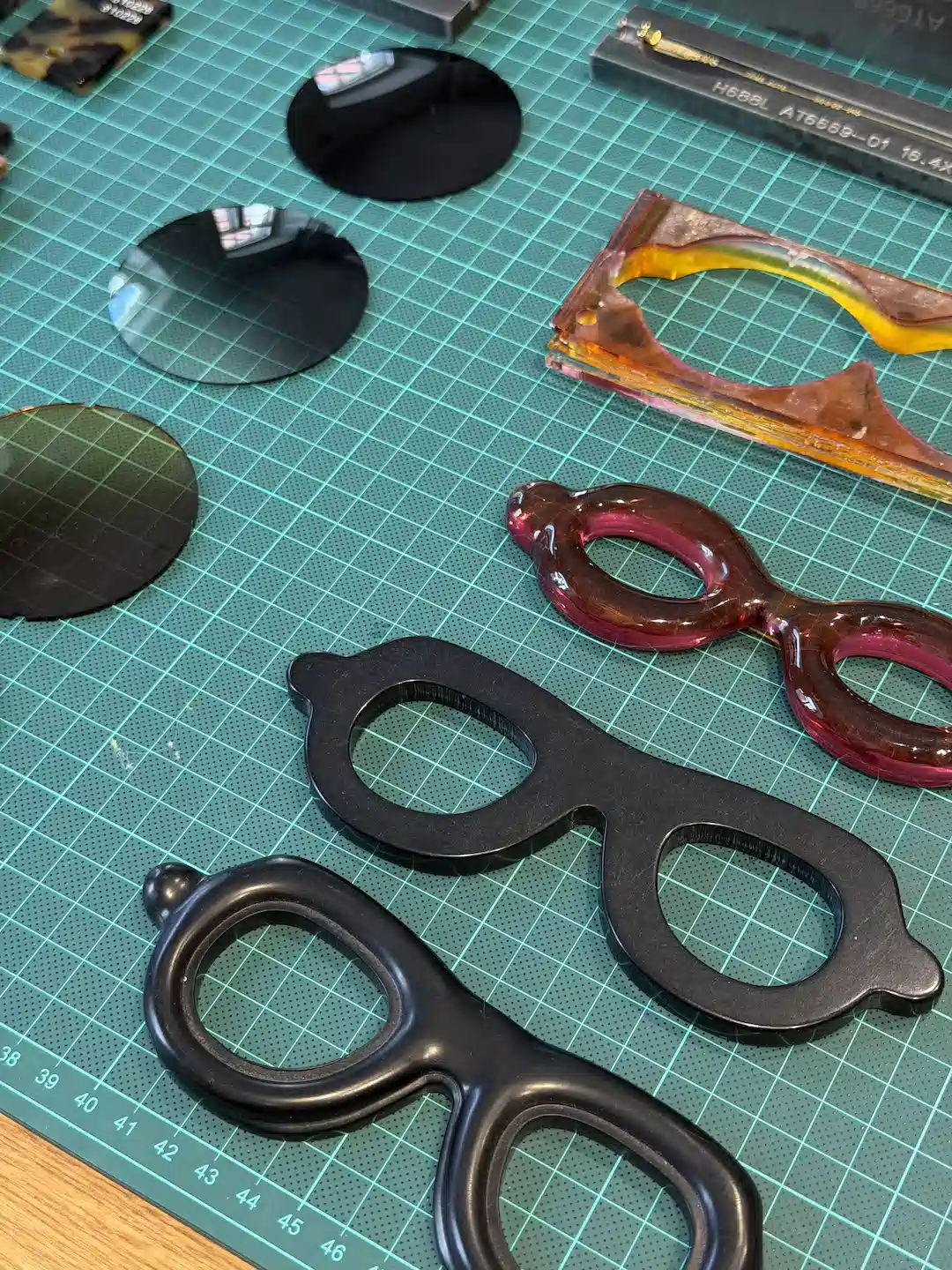
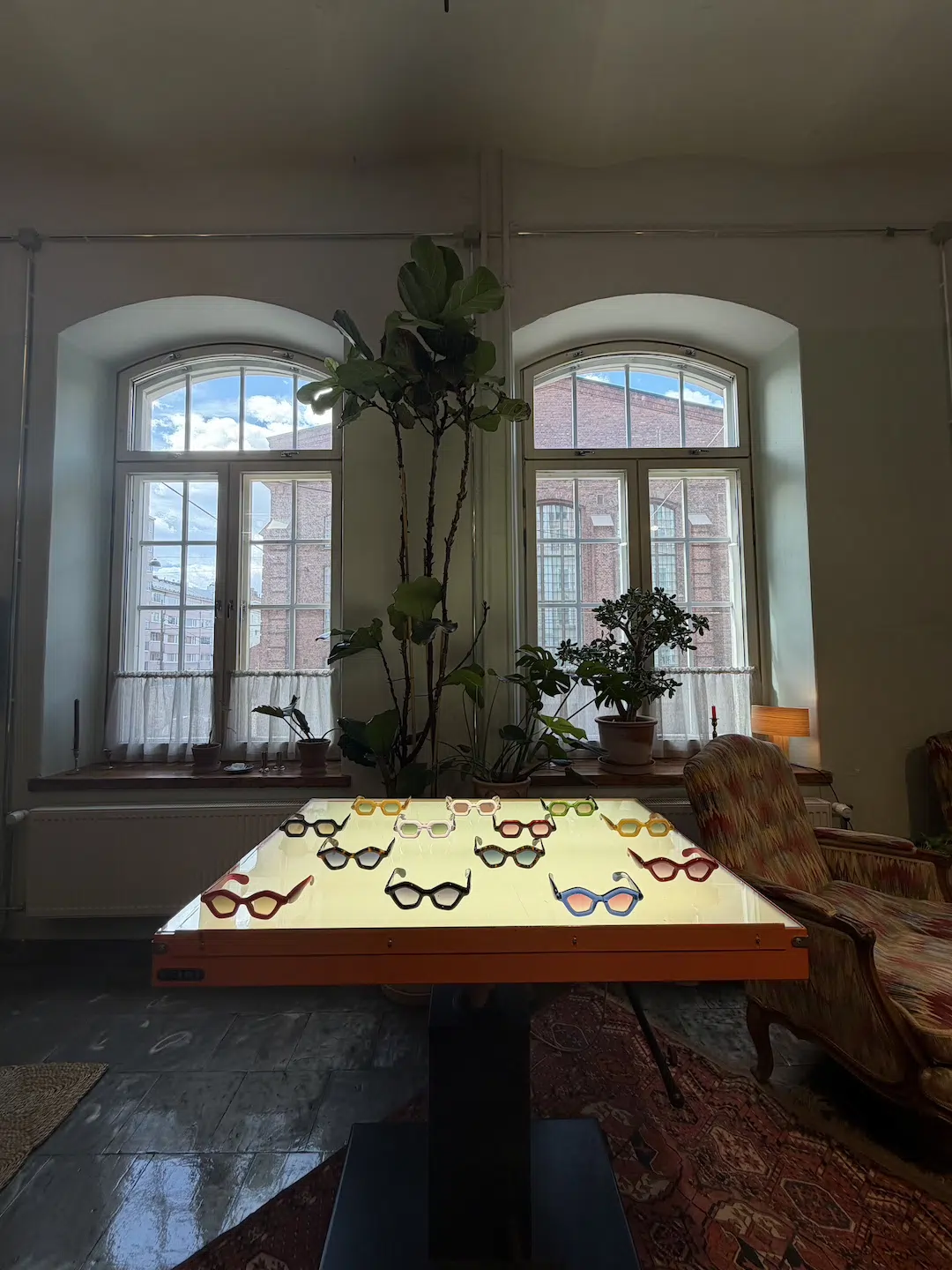
On the afternoon of the first day, we visited a new generation of Finnish designers.
At Paloceras, we experienced eyewear that merges a mythological worldview with digital culture. It offered a glimpse into a new form of luxury emerging in an era where images and ideas are instantly disseminated across the world through screens.
INTERVIEW | Paloceras Co-Founder & Creative Director Mika Matikainen
“Pursuing Forms Beyond Convention”
— Could you introduce your brand?
Mika: “Paloceras is an independent eyewear brand based in Helsinki, Finland. We create fantasy eyewear inspired by mythology, precision, and the pursuit of the extraordinary. We aim to create pieces that combine sculptural design with functionality, while also treating eyewear as a design object in its own right.”
— What was the main message you wanted to convey through your presentation at Fashion in Helsinki this year?
Mika: “We aim to create timeless objects that remain relevant beyond seasonal trends. For this year’s presentation, we wanted to introduce the two key pillars that shape the world of Paloceras. One is the ‘Pebble’ series, defined by its sculptural forms and rounded volumes, and the other is our experimental production laboratory in Helsinki, the ‘MicroFactory.’ Through both design and production, we wanted to showcase the breadth of expression that defines Paloceras.”
— Could you tell us about the creative details and craftsmanship that are particularly important to your work?
Mika: “We are constantly pursuing unique forms that challenge the conventions of eyewear design. The ‘Pebble’ series itself was developed through an extensive search for the right technologies and manufacturing partners capable of realising our original vision without compromise. While maintaining a deep respect for traditional eyewear craftsmanship, we also actively embrace new materials and technologies such as 3D printing. By combining both approaches, we hope to expand the possibilities of eyewear design.”
Available in Japan: Oh My Glasses TOKYO Ginza
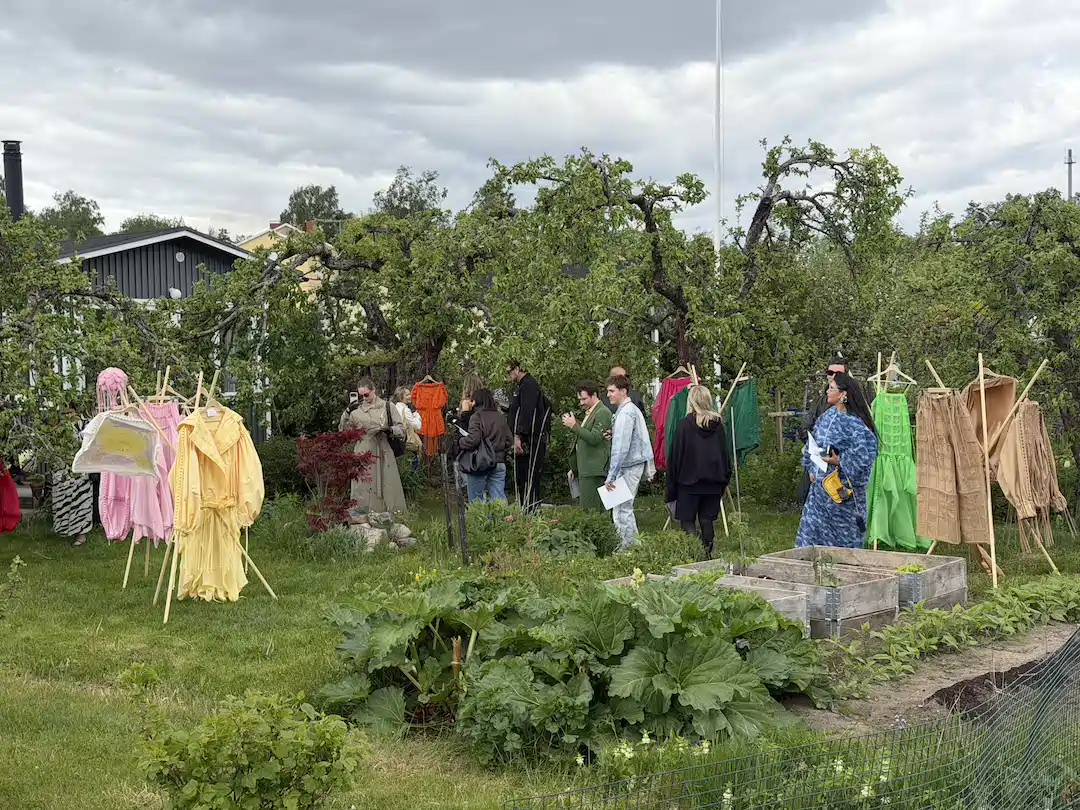
Next, we visited Sofia Ilmonen. Her modular garments, which can be endlessly transformed through buttons and loops, seemed to redefine the very concept of sizing. Sustainability here is not approached solely as environmental responsibility, but as a system designed for longevity—clothing created to be worn, adapted, and cherished over time.
INTERVIEW|Sofia Ilmonen, Designer
“Clothes should adapt to people, not the other way around.”
— Could you first tell us about your brand?
Sofia:
“My brand is built around the idea that people should not have to adapt to clothes; rather, clothes should adapt to people. Through a modular design system, garments can be repaired, updated, and transformed in shape. I want to create clothing that grows with the wearer, rather than existing for trends.”
— What inspired your latest collection, Paeonia?
Sofia:
“The inspiration came from the peony flower, which has been passed down through generations in my family. For me, the peony symbolizes something that is inherited yet constantly evolving. What fascinated me most was the contrast between its short blooming period and the strong roots that remain underground. The flower is ephemeral, but the roots give rise to new blooms every year. I wanted to translate that idea into clothing.”
— What is most important to you in your creative process?
Sofia:
“Balancing innovation with traditional craftsmanship. I have experience working in couture and luxury ateliers, including contributions to Alexander McQueen. Even when developing new modular systems, craftsmanship is always at the core. I believe sustainability is not only about materials, but also about intelligent design that allows garments to be used for a long time.”
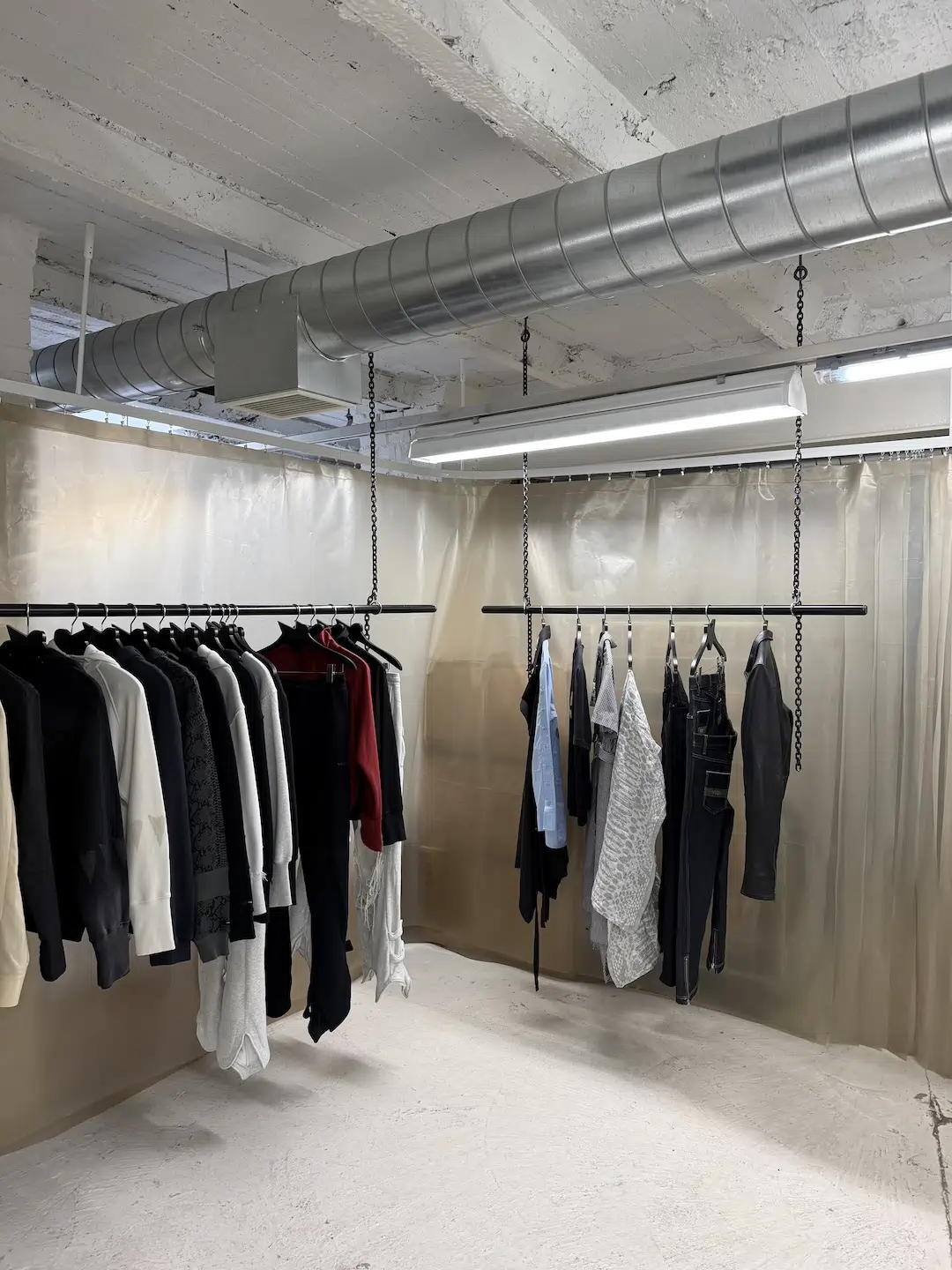
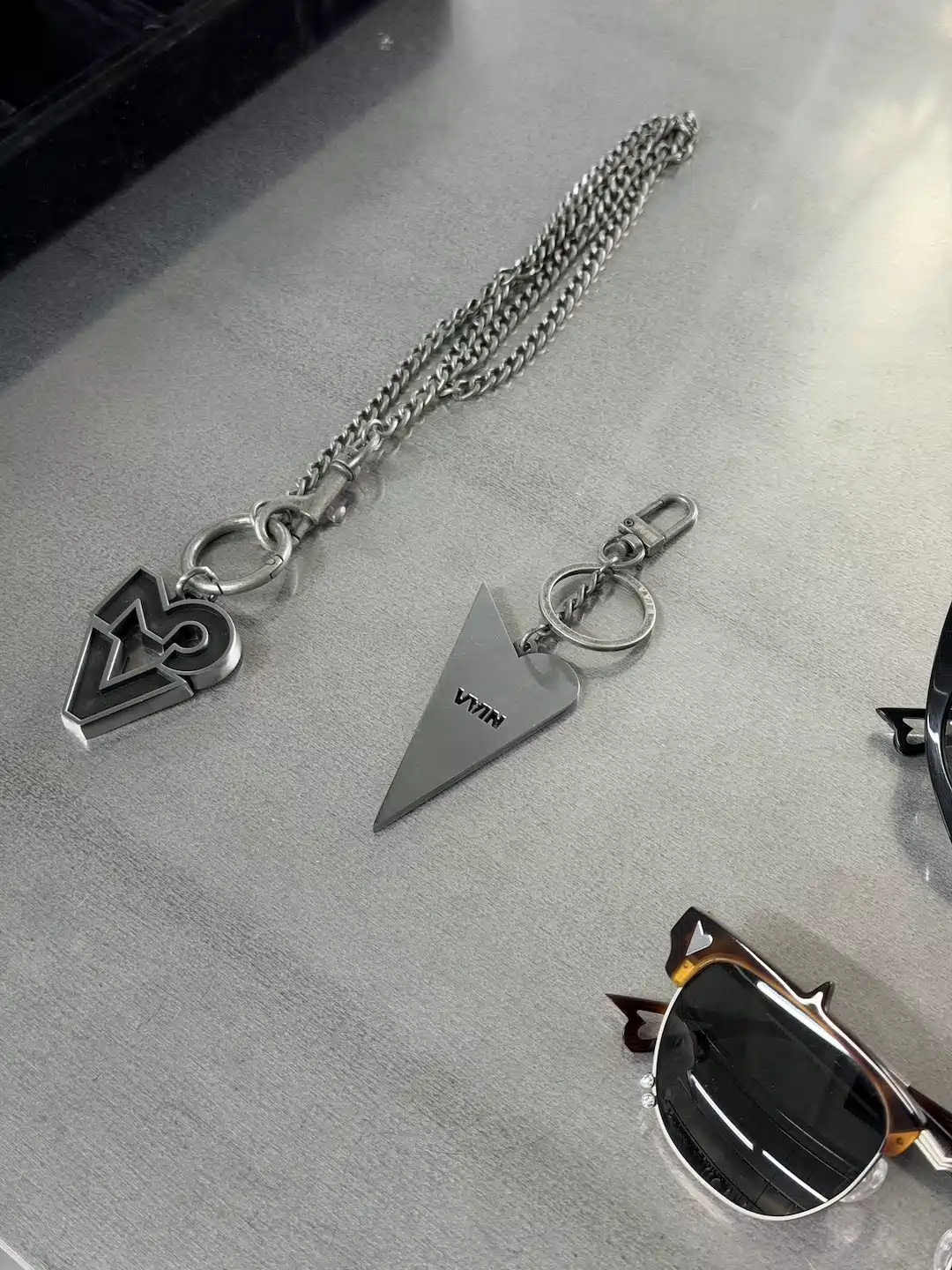

In the evening, we visited the studio of VAIN. Founded by artist and creative director Jimi Vain and CEO Roope Reinola, VAIN is a Helsinki-based fashion brand that is also carried by the Japanese select shop NUBIAN, reflecting its growing presence in Japan.
The space was filled with young visitors, creating a sense of energy closer to a community than a traditional brand presentation. Through the use of upcycled and deadstock materials, VAIN explores themes such as love, loneliness, and human connection through a contemporary lens, resonating deeply with the audience.
INTERVIEW|Jimi Vain, Creative Director of VAIN
“It feels like welcoming people into our own home.”
— What does presenting at Fashion in Helsinki mean to you?
Jimi:
“Fashion in Helsinki is a very special place where people from the industry gather and truly feel a sense of community. This year, we invited guests into the studio where we spend most of our time. We wanted to create a relaxed yet intimate atmosphere—almost like welcoming people into our own home.”
— What are your impressions of the Japanese fashion scene?
“Japan has always been very special to me. I even learned to read by watching Dragon Ball. Since my teenage years, I have collected clothes from Japanese designers. One of the reasons the Japanese fashion scene is so rich is its long history and culture around clothing, which has led to a strong vintage culture.
Every time I visit Japan, I always find something special—books, clothes, figurines. It is truly a very special place for us.”
Experiencing One of the World’s Leading Fashion Education Environments: The Graduation Show
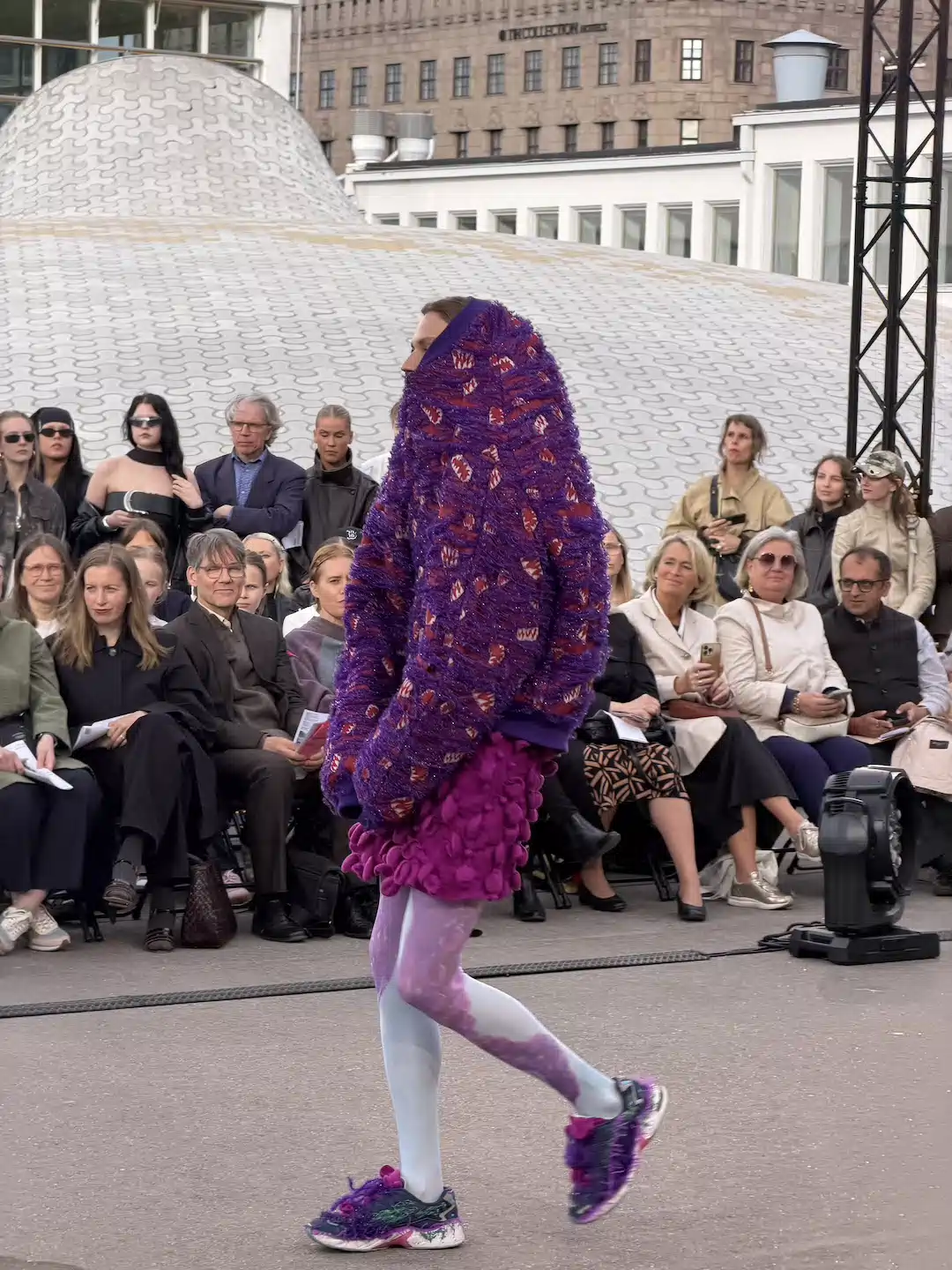
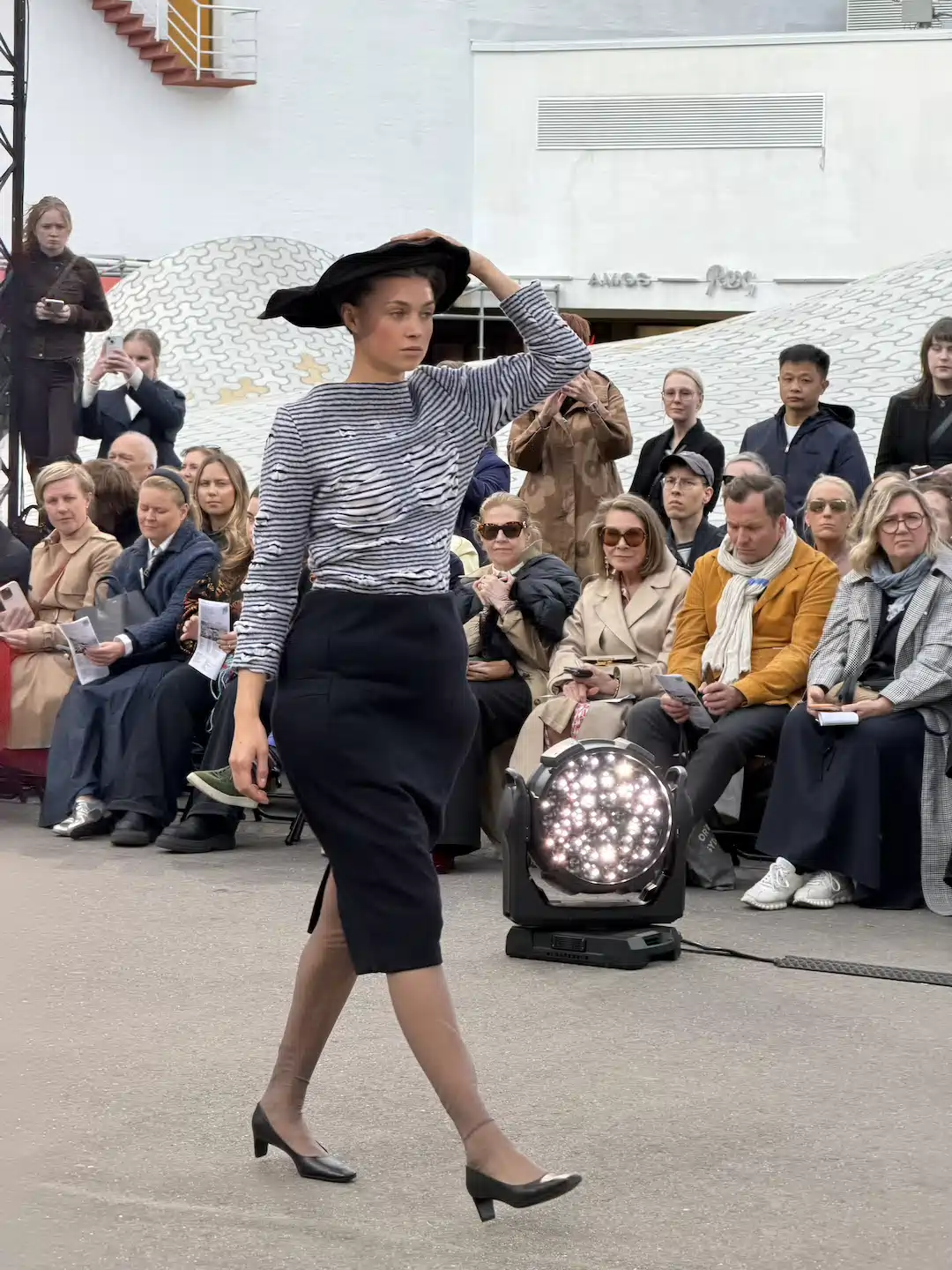
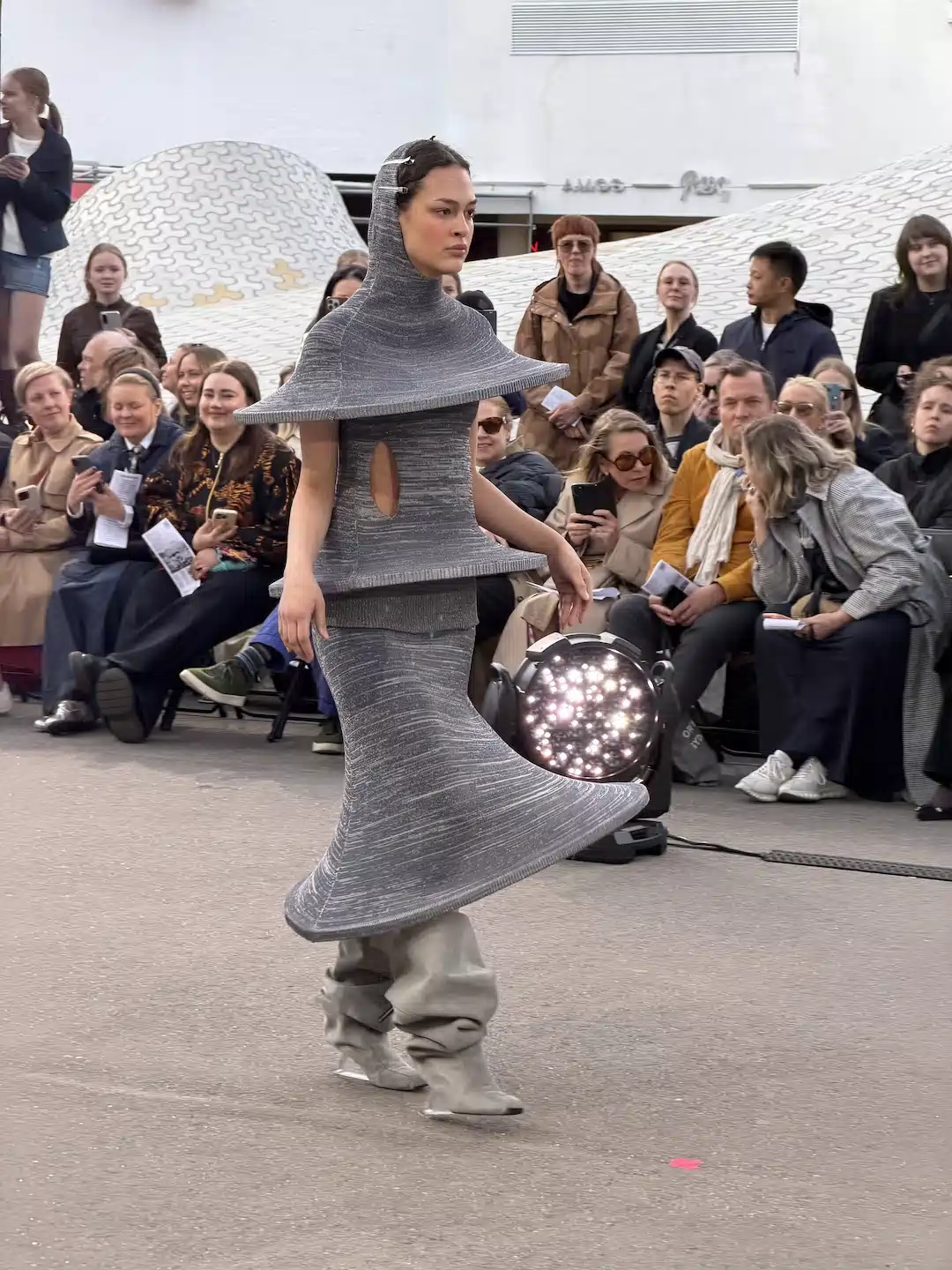
That evening, we attended Näytös26, the graduation show of Aalto University. It is widely regarded as a presentation that symbolizes one of the world’s leading fashion education programs.
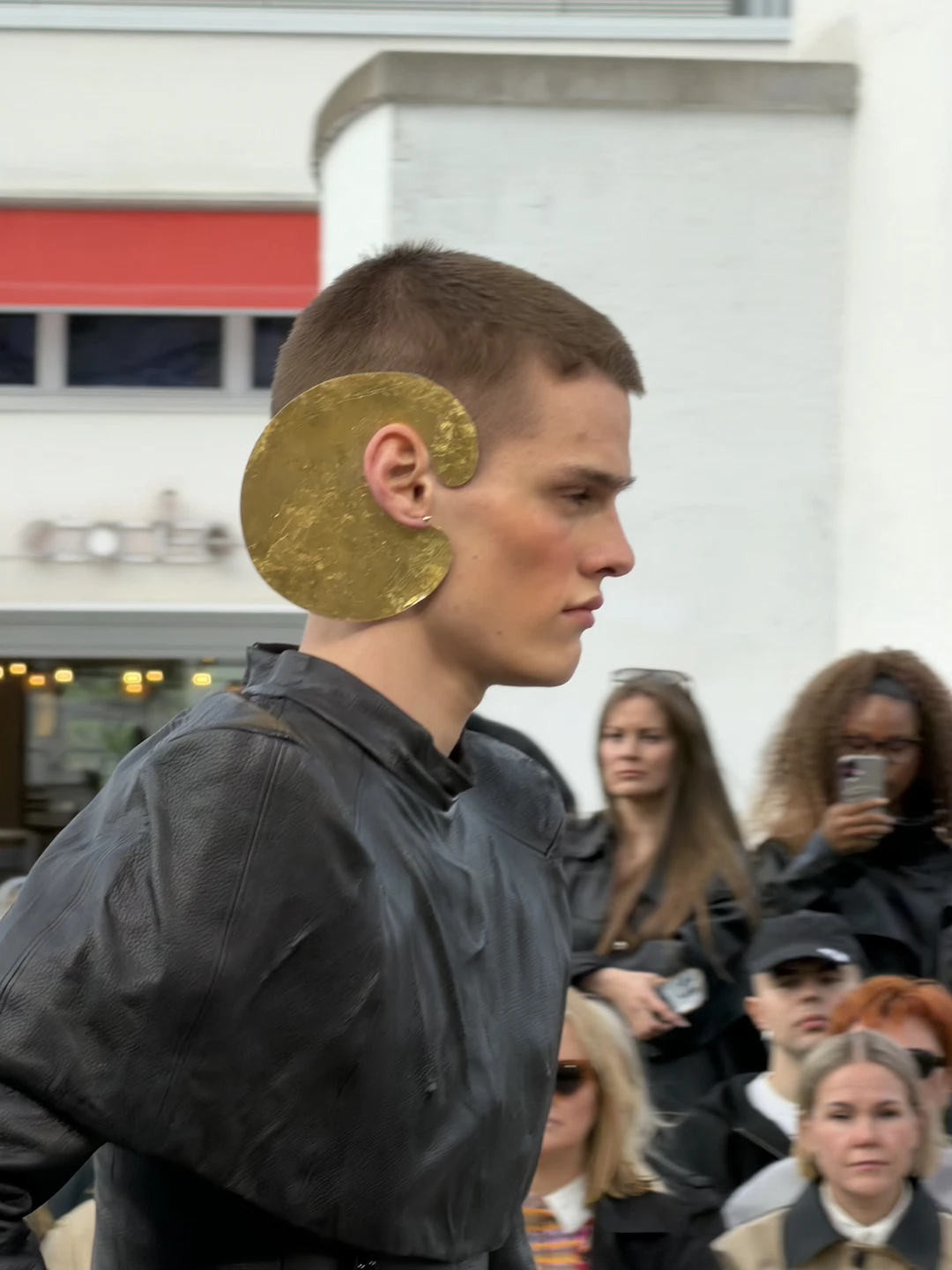
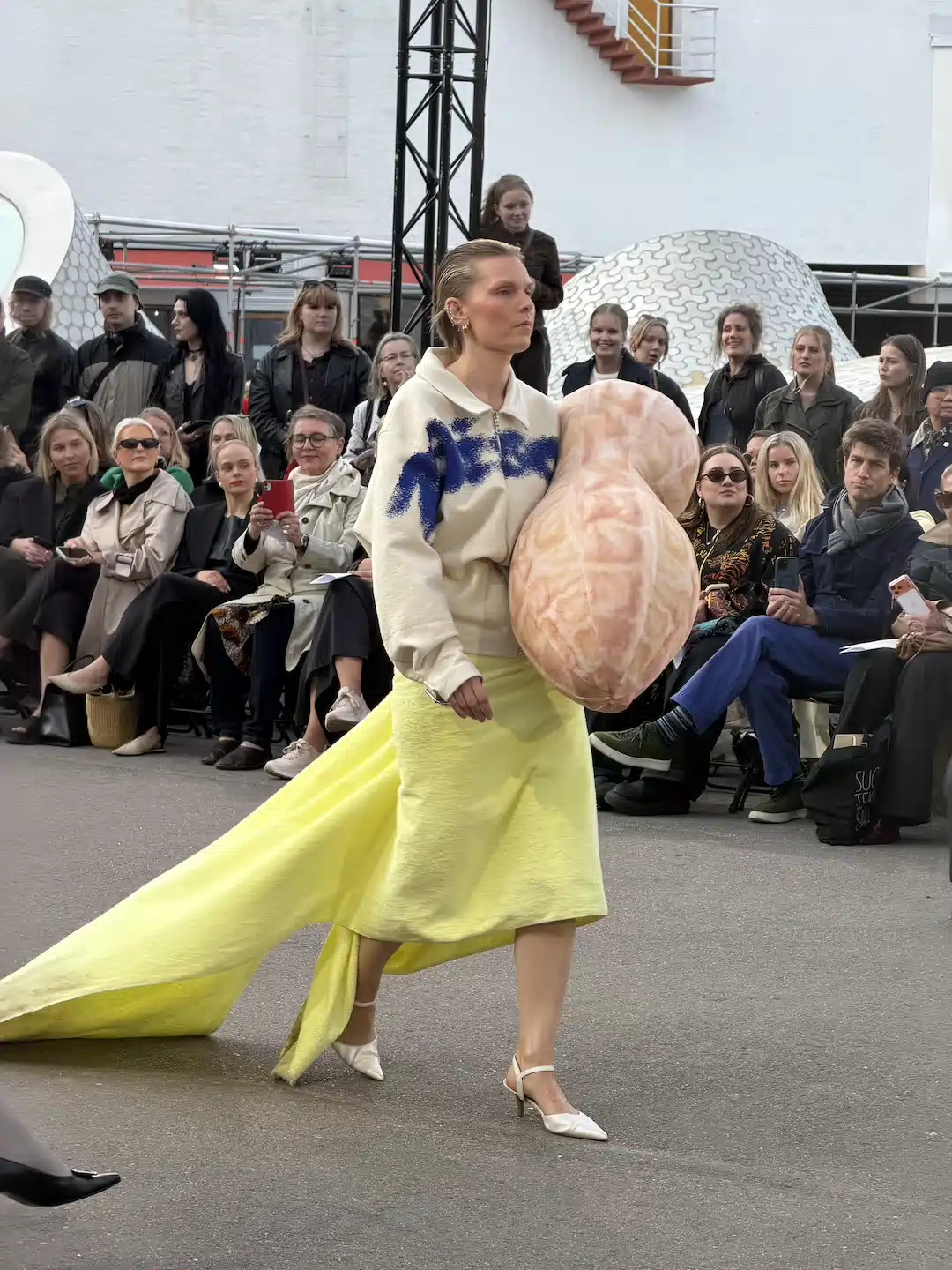
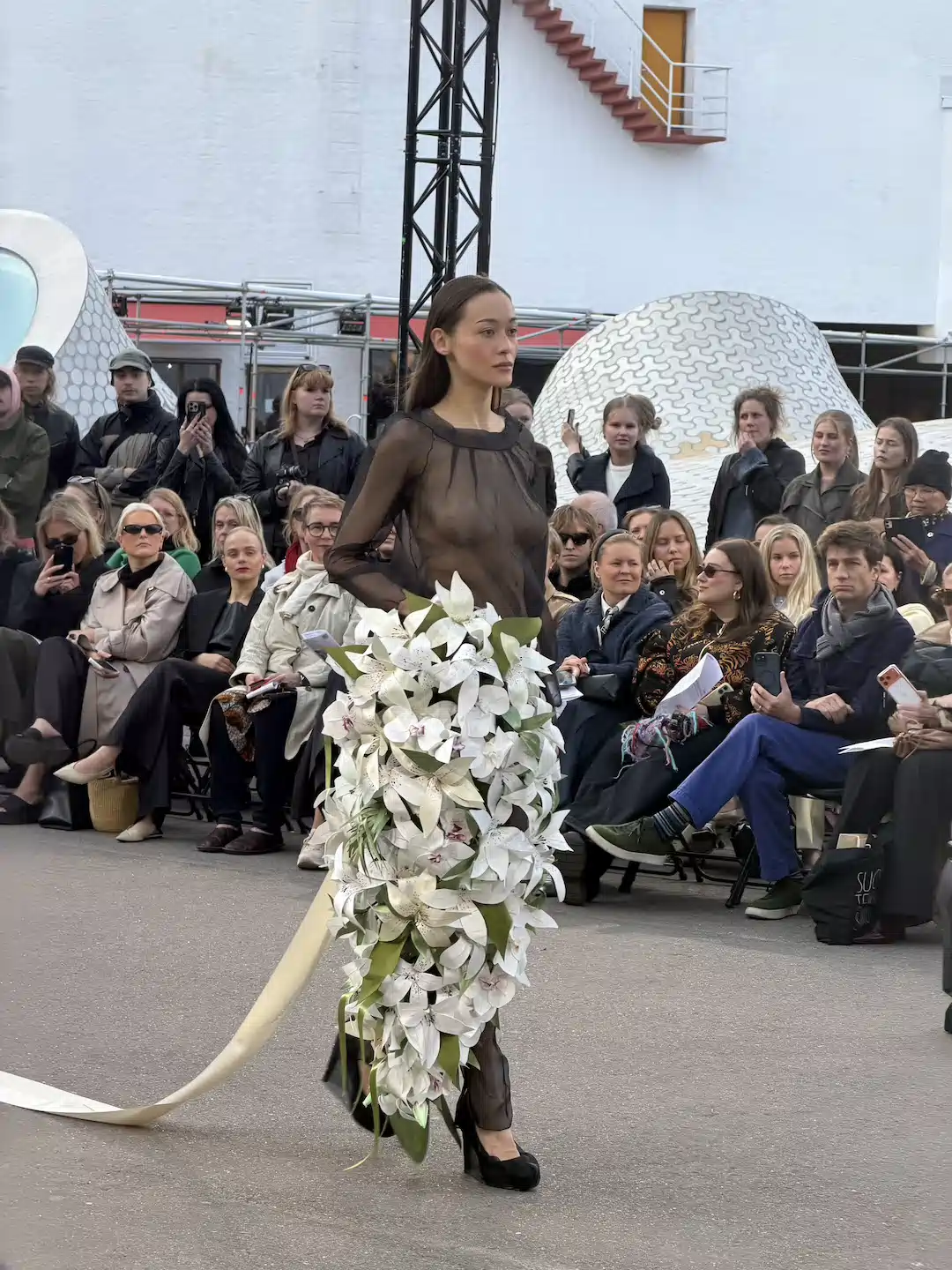
What stood out was not only the level of execution in the collections, but also the depth of inquiry behind them—material research, textile development, and approaches to social issues. These were not simply exercises in garment-making, but explorations that extended beyond clothing itself.
Rather than merely “training” young designers, the environment challenges them by giving them space to question, experiment, and redefine fashion. This educational philosophy was strongly felt throughout the show. It may be from here, within this space, that the future of Helsinki is being shaped.
The Beauty of Craft Expression Revealed Through Hand-Knitted Work
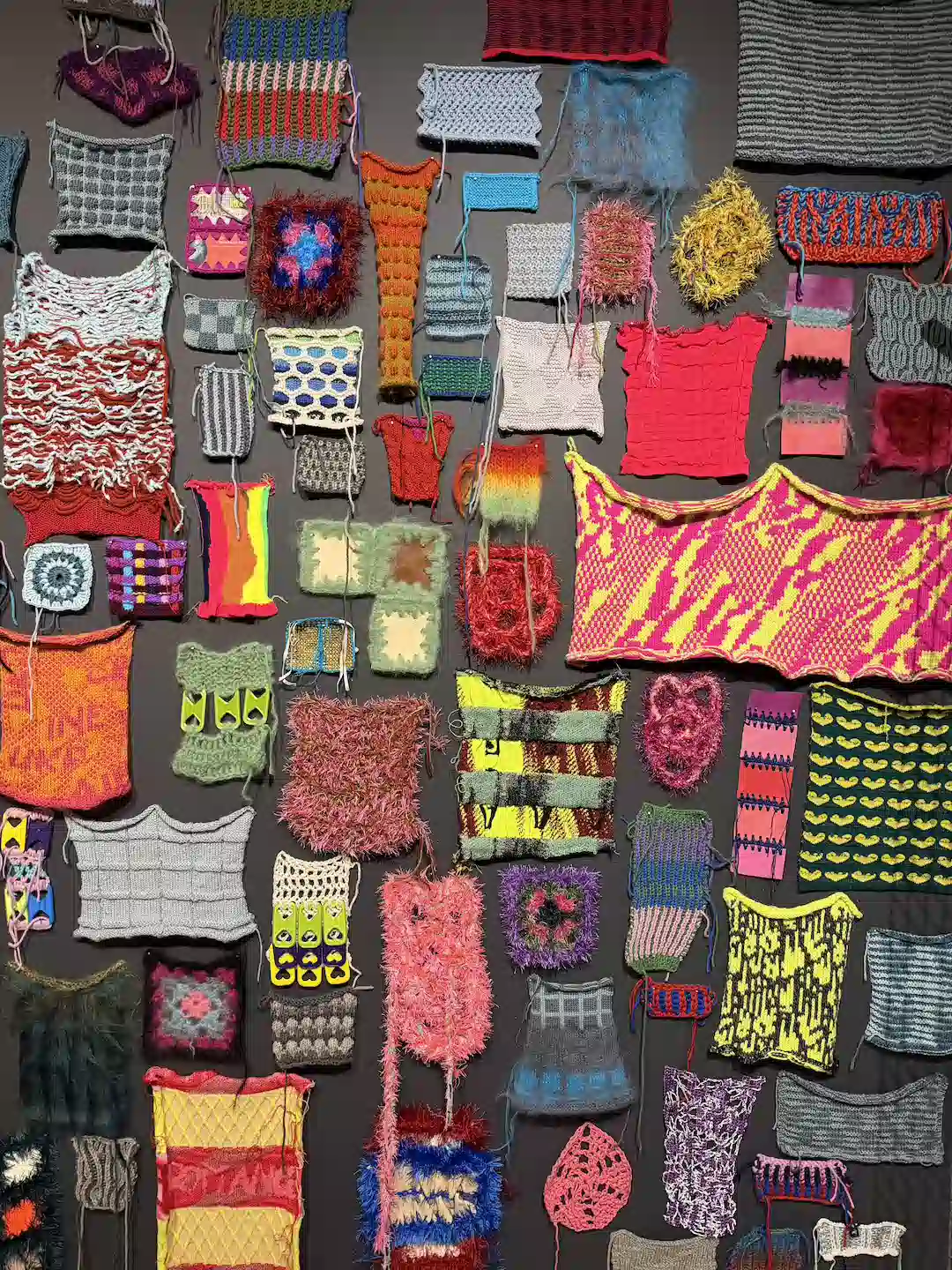
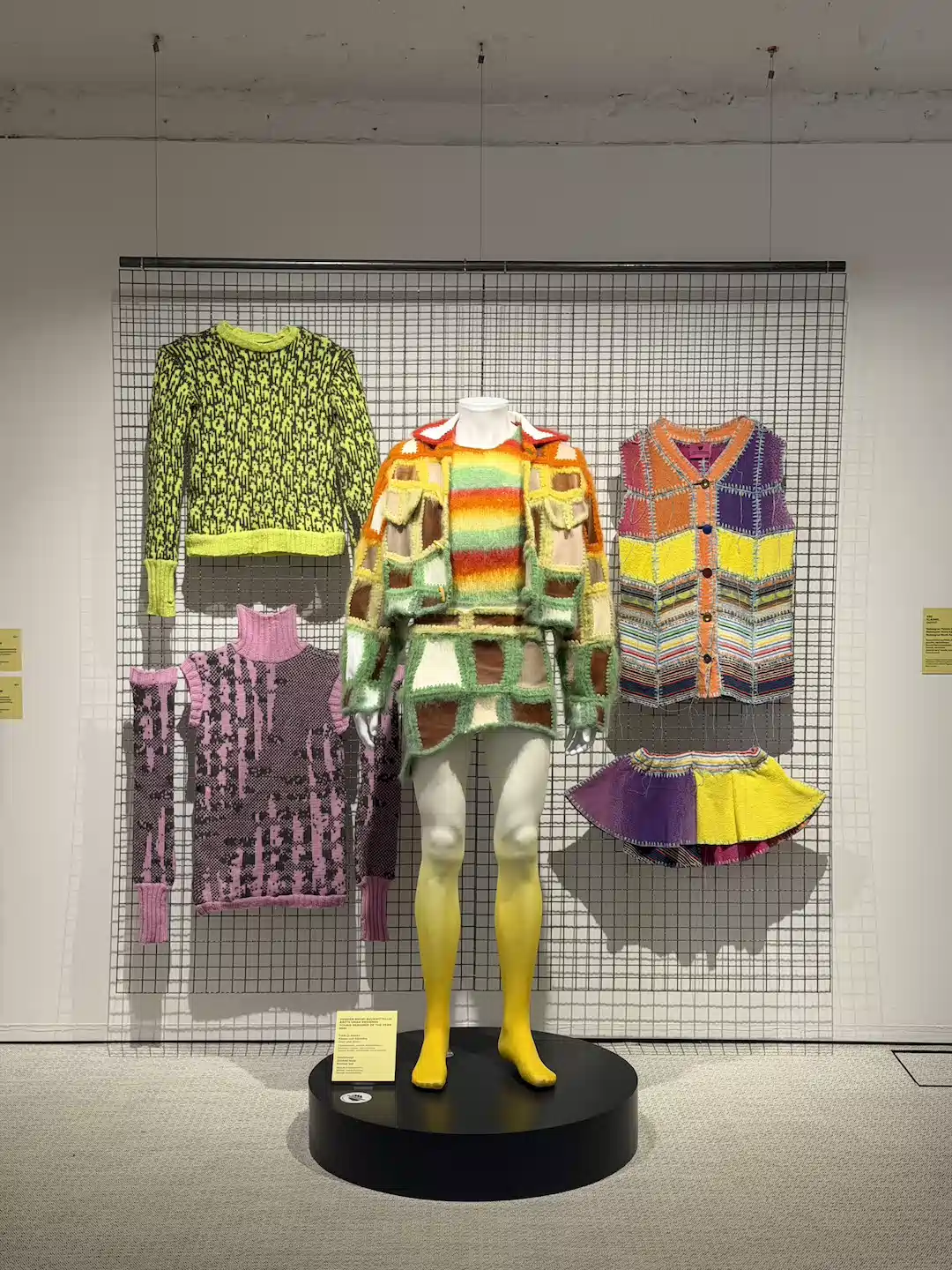
On the morning of the third day, we visited an exhibition by Juha Vehmaanperä at AD Museum Helsinki. Before entering the space, the term “knit artist” evoked something soft and delicate. However, what we encountered in the exhibition completely overturned that expectation.
Vivid colors, bold forms, and visible traces of handwork across the knitted surfaces revealed a practice infused not only with warmth, but also with punk-like energy and a sense of resistance.
The exhibition included not only garments but also installations and material experiments, suggesting that craft is treated not merely as a technique, but as a language for self-expression.
In an era defined by mass production and efficiency, the work also seemed to question the meaning of making things slowly, by hand, and with time. Above all, what made the experience memorable was the artist’s personality itself—warm, engaging, and full of energy, which led to a very inspiring conversation.
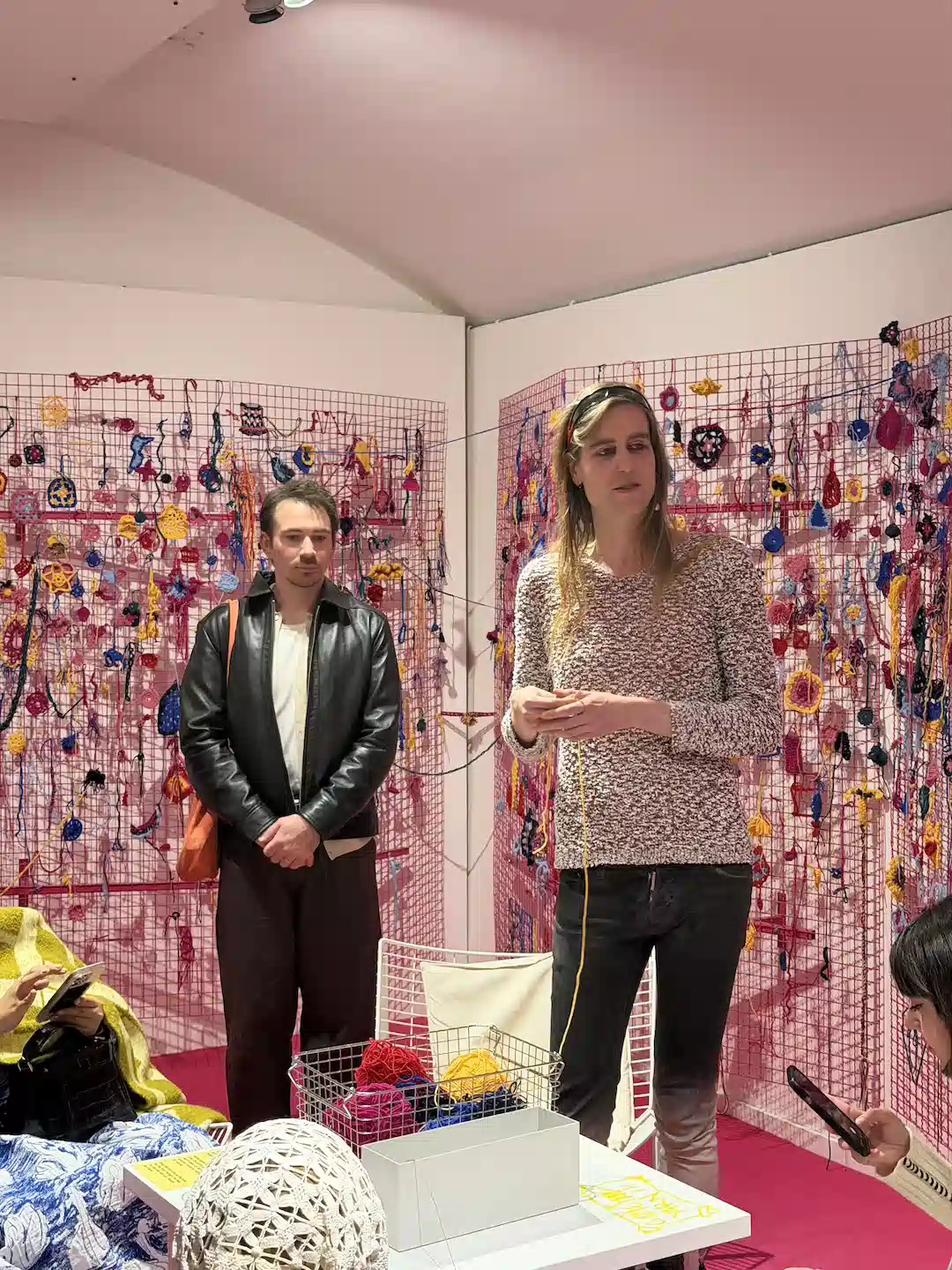 Right:Juha Vehmaanperä
INTERVIEW|Knitting Artist Juha Vehmaanperä
「“Craft is an art form capable of shaping the world.”
— Could you tell us about your work?
Juha:
“I work as a knitting artist, craftsman, and educator. In addition to creating custom-made knitwear, I also focus on education, helping people learn how to make garments themselves. I believe education is key to making fashion consumption more sustainable. When people understand how much time and skill is required to create something, they begin to value it differently.”
— What did you want to express through your presentation at Fashion in Helsinki?
Juha:
“The most important message in this exhibition is that craft is an art form capable of shaping the world. Craft is not a relic of the past; it is a highly contemporary practice, especially in a time when fast fashion and AI technologies are rapidly evolving.
Nordic design is often associated with minimalism and functionalism, but I also want to show that behind it lies a powerful energy—colorful, expressive, and free.”
— What is most important to you in your creative process?
Juha:
“I am a hand-knitting artist, and I make most of my pieces myself. Maintaining a direct connection with what I create is extremely important. That relationship gives garments additional value.
Each piece requires years of training and countless hours of work. That, to me, is where the beauty of expression lies—and where the true essence of fashion can be found.”
OTSAMO and Finland’s Idea of Elegance
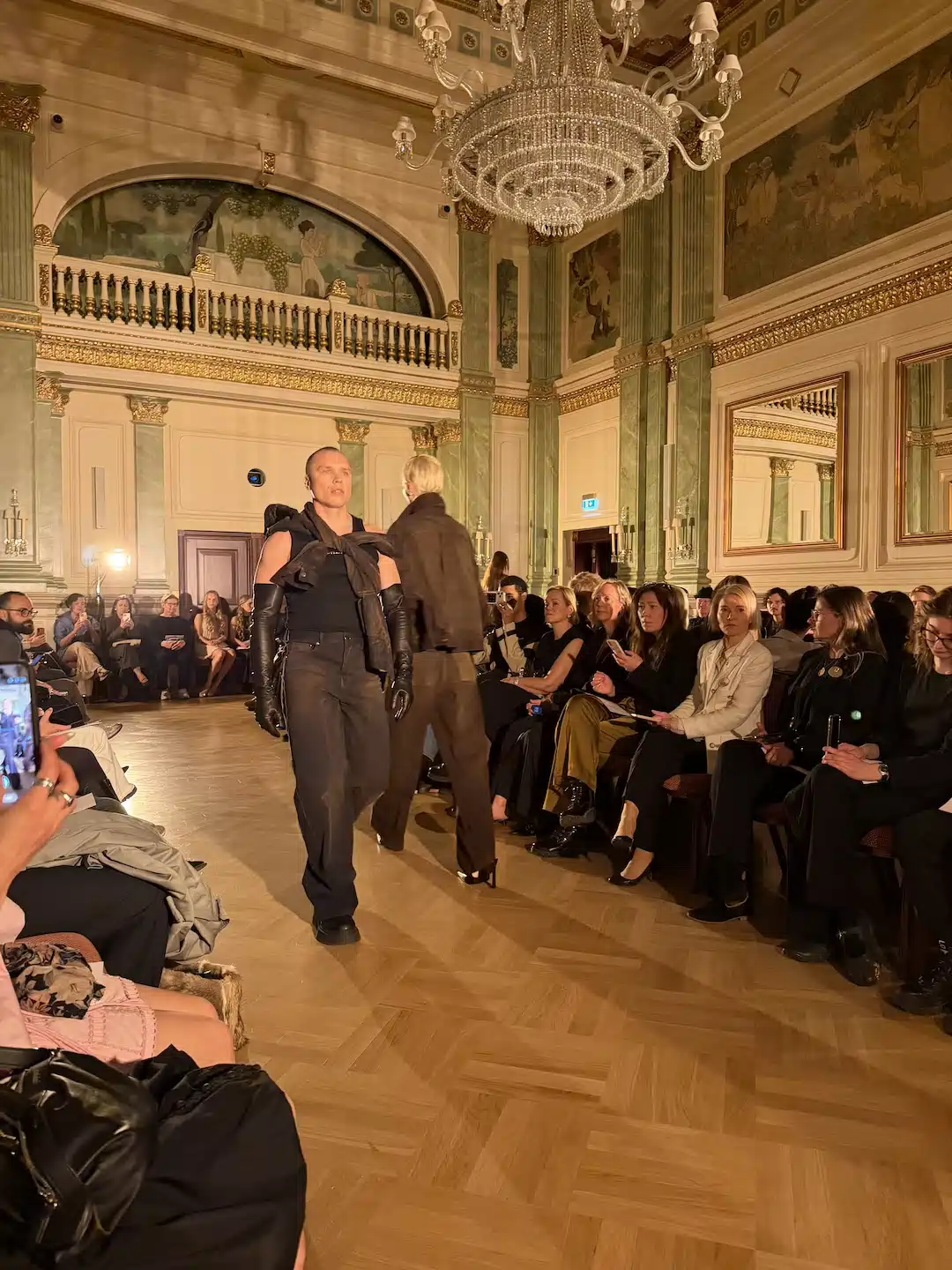
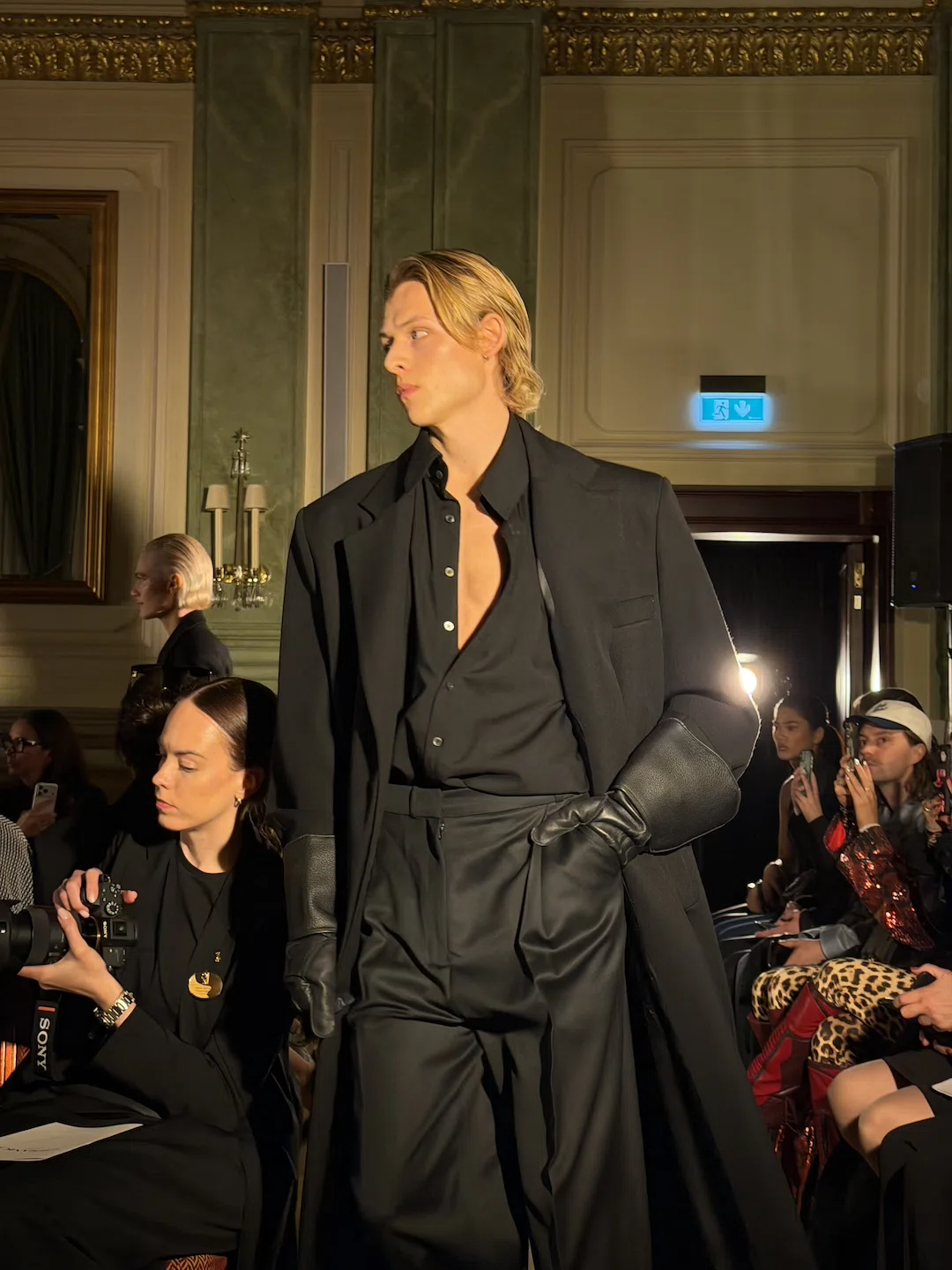

The next stop was the runway show of OTSAMO, held at Hotel Kämp. The brand, designed by Mert Otsamo, is known for its sculptural silhouettes, precise tailoring, and a perspective free from gender or social constraints.
Rather than relying on decorative excess, the designs emphasize the beauty of structure itself—a distinctly Nordic sensibility.
As the director of FIH noted, “It carries a rare couture sensibility for Finland, yet remains quiet and rational in its expression.” This comment left a strong impression.
Insights into the Future of the Industry at Fashion Talks
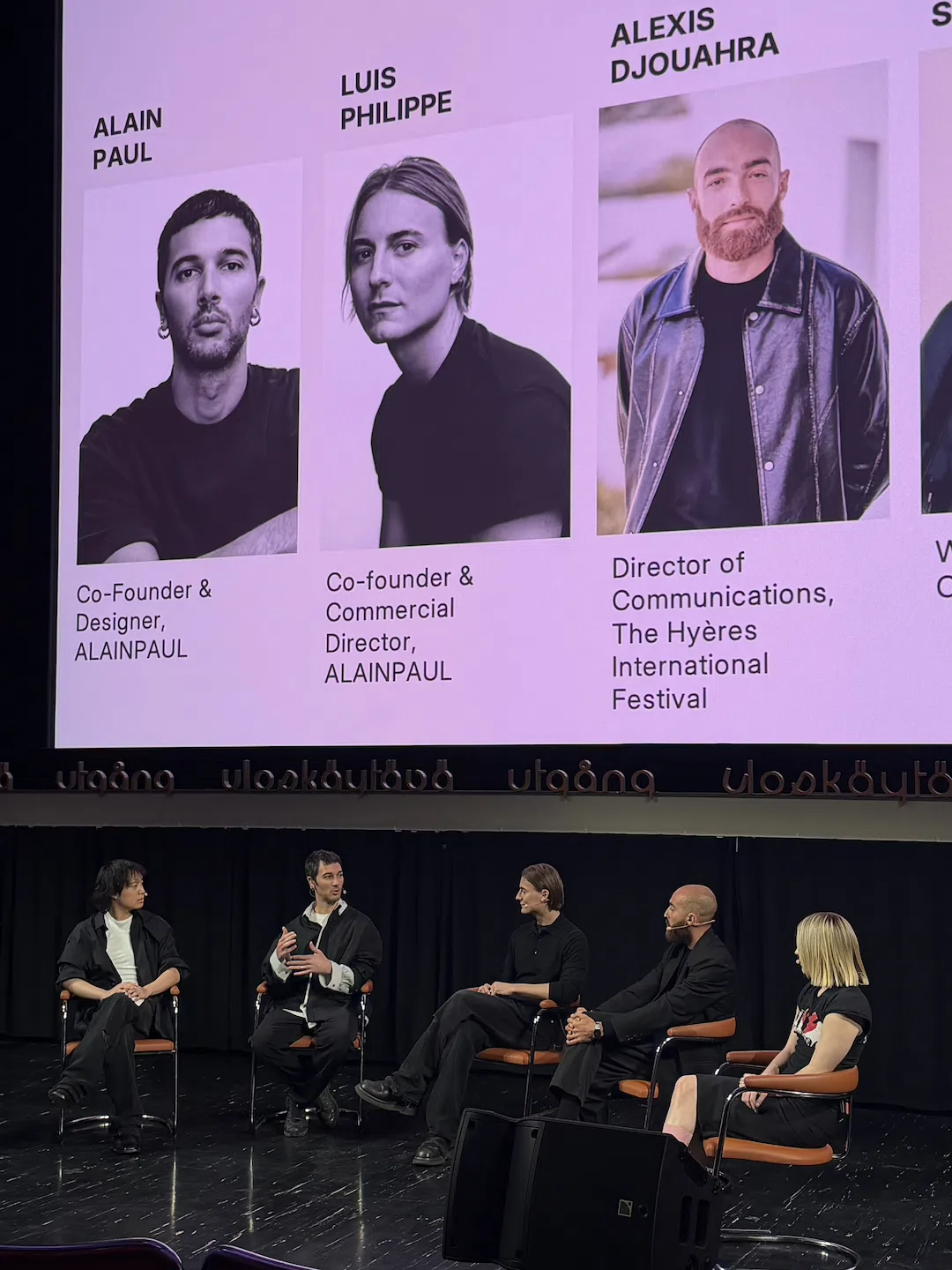
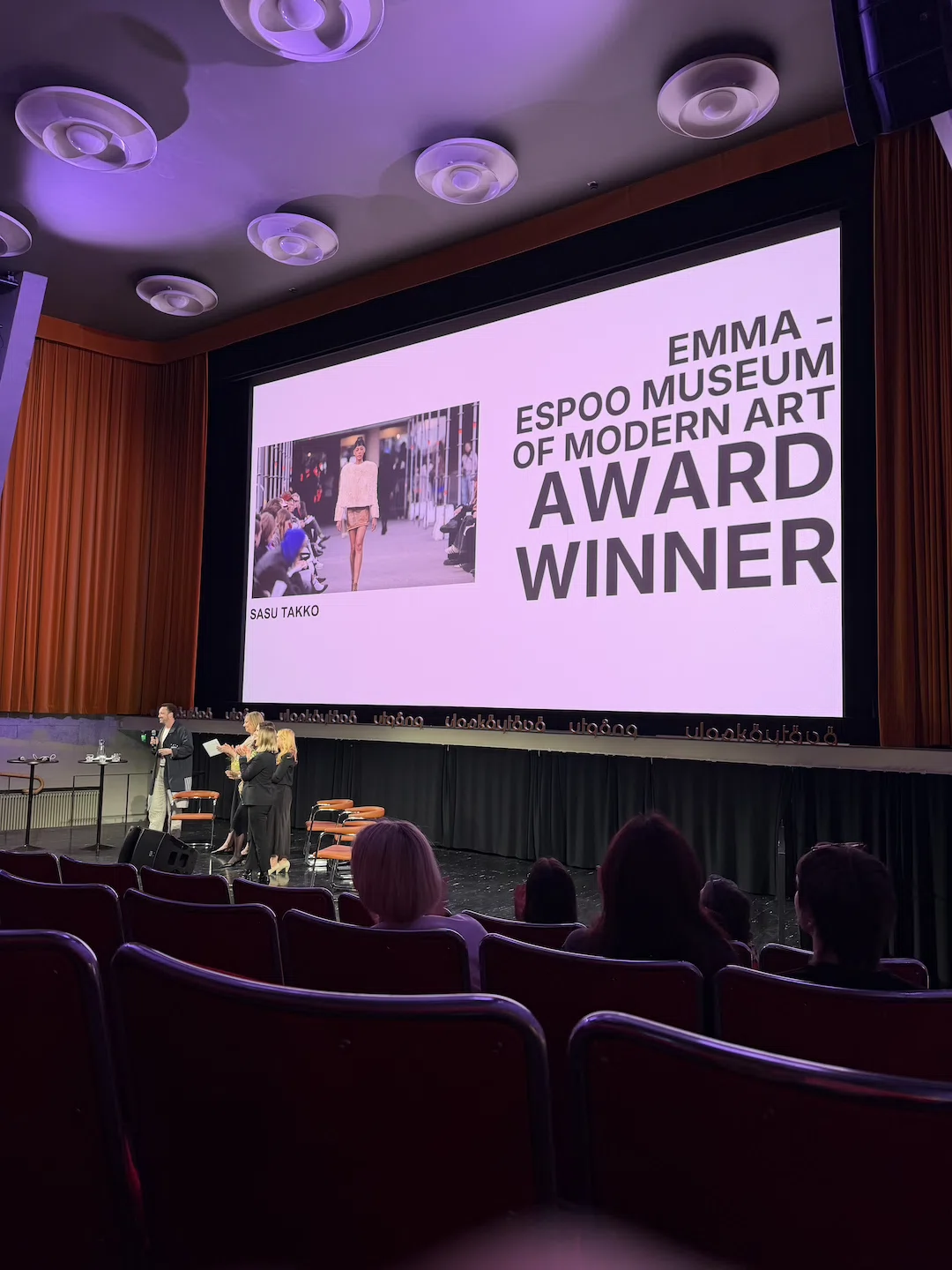
In the afternoon, we attended Fashion in Helsinki Talks, held at Bio Rex. Designers, journalists, and educators gathered to discuss the future of fashion, including ALAINPAUL designer Alain Paul.
What stood out most was that sustainability was not treated as a buzzword or passing trend, but as a shared, long-term responsibility—something universally recognized as a permanent challenge.
How we make, how we sell, and how we preserve garments: fashion was discussed as a holistic system, one that also serves as a lens through which to examine broader social issues. In Finland, conversations about the future are not abstract ideals, but ideas already being put into practice. This realization became a firm conviction throughout the event.
What Finland Taught Us
In the evening, we attended the Finnish Fashion Awards 2026. The gathering brought together emerging designers, heritage brands, educational institutions, media, and buyers in one space.
What became evident was a mindset centered not on competition, but on co-creation. No single figure stands at the center; instead, there is a shared commitment to nurturing the next generation across the entire industry.
Throughout Fashion in Helsinki, one recurring impression was that Finnish fashion is not merely an industry. It is a system that integrates education, craft, sustainability, and human connection.
Four days spent under the midnight sun of Helsinki revealed that behind the surface of glamorous presentations lies a set of insights about the future of fashion. What was most striking was how people in Finland use fashion as a way to discuss the future from multiple perspectives—not to follow trends, but to contribute to building a better society.
The four days of Fashion in Helsinki were deeply fulfilling and profoundly inspiring.
Share



- Reporting & Interview Support : Charles Kawamoto(QUI)
- Edit & Interview : Yukako Musha(QUI)